


I sat in solitude last night, overlooking the canal, trying to sync my inner world with its calm.
Within that calm, without warning or invitation, something old rose to the surface.
Not violently. Not dramatically. Just enough to remind me it was still there.
My eyes began to shed something I hadn’t consciously summoned.
At first, I couldn’t name what it was.
I’ve spent years staring down my demons—wrestling them, negotiating with them, integrating most of them. But there has always been one that refused to come quietly. Defiant. Patient. Waiting.
Its refusal didn’t feel like failure.
It felt like a signal.
There was still more to learn. About myself. About life. About the cost of running—and the price of stopping.
There’s a wound you carry when your father keeps leaving.
Not the kind that bleeds once and scars over. The kind that opens and closes across decades—triggered by a message, a memory, a moment of stillness by the water.
This is the story of how the boy I was finally met the man I became.
And why that meeting completed my rebuilt foundation.
Two Beginnings
THE BOY — Age 11, Jamaica
I was standing outside Manning’s High School when he showed up.
It had been a couple of years since I’d seen him. My father—this man who drifted in and out of my childhood like weather I couldn’t predict—had reappeared without warning.
We had dinner that evening. I remember not caring about hanging with my friends. Didn’t go to soccer practice. Had no interest in playing cricket. The little boy inside me was just happy to be there with him.
Before he left, he told me he was going away again but would come back to see me before he did. We’d hang out before he left for good, he said. He gave his word.
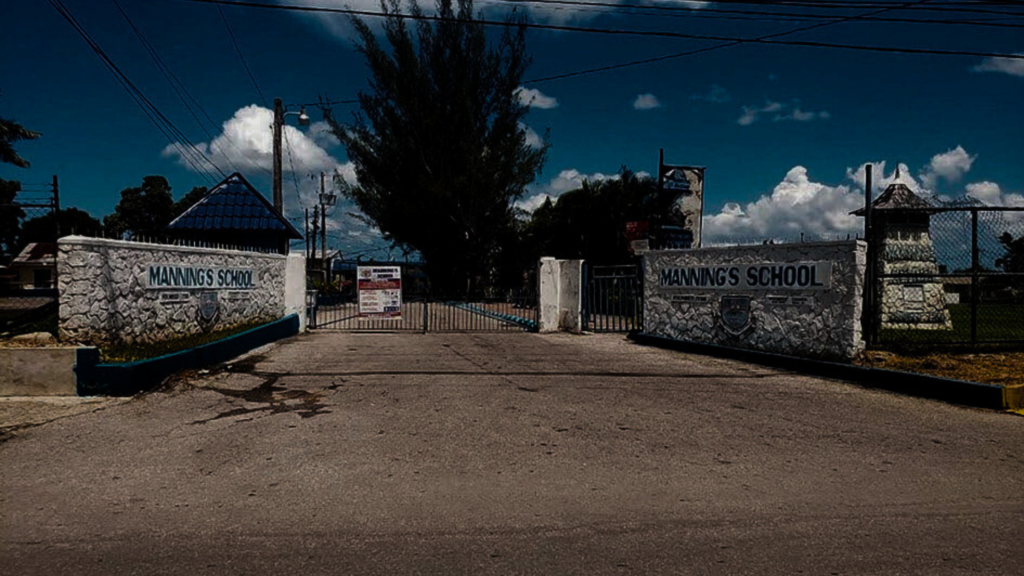
I remember waiting after school the day he said he would come.
He never showed up.
THE MAN — Recent, Present Day
The text came in while I was finishing up at work.
“I will be in town, you should come and see me.”
For a split second, something flickered. The boy who used to wait at windows. The one who measured his worth by whether his father stayed.
I texted back: “Ok. I’ll try to come by.”
The day I was meant to go see him, I texted again. “I’m getting off work now, I can swing by for a few minutes.”
Message read. No response.
A few minutes later, I sent another: “Let me know if I should make the trip.”
Message read. No response.
I waited thirty minutes. Both messages sitting there with blue checkmarks—seen, acknowledged, ignored.
And something in me that would have once felt broken… didn’t.
I didn’t feel upset. I didn’t feel sad or disappointed.
I felt relieved.
Decades apart. Same pattern. Different man.
Two Patterns Form
What the Boy Learned
When you’re a kid and your father keeps leaving, you don’t think, He’s unstable. You think, Maybe I’m not enough to stay for.
So the boy I was absorbed the pattern as truth.
He learned to carry quiet pain. To regulate his own emotions because no one was there to help him process them. To expect inconsistency because consistency was never modeled. To stabilize himself because no one else would.
And without realizing it, he began the lifelong process of learning manhood through survival, not mentorship.
The phantom limb feeling started then—knowing something should be there, feeling the outline of it, even though it was never whole to begin with.
Psychologists call this a father wound—a deep emotional injury that forms in a child growing up without a father, or without the steady, protective presence of one. But definitions don’t capture the experience.
A father wound feels like standing in a storm you didn’t create, getting soaked, and then being told to explain why you’re wet.
What the Man Built
I made myself a promise as that boy standing outside Manning’s High School.
Multiple promises, actually.
I promised I would never make someone else—especially not my children—feel as lonely and confused as I felt. I promised I would never have children until I was sure I wouldn’t leave or hurt them. Until I was sure I was the man my children deserved. Until I was sure I’d become the man I needed.
I promised I would not create a hell and leave someone I’m supposed to love to figure out how to survive in it.
I would rather forever be alone.
Maybe that was an over-correction. Probably was. But I had to be sure.
So I built walls. High ones. In relationships, I became guarded—unable to let people past a certain point, unable to open up and be truly vulnerable. I didn’t learn how to be vulnerable, how to start trusting, until I started getting to know myself.
Men who grow up in these gaps—without fathers or with fathers who were present in body but absent in every way that mattered—tend to become one of three masculine templates:
- Hyper-masculine aggression (rage as armor)
- Fragile masculinity (brittleness disguised as strength)
- Self-forged masculinity (building yourself from scratch)
I worked to forge myself into the third.
But even steel remembers the ore it was formed from.
Research is clear on this: fatherless sons often become highly capable, highly responsible men—but internally exhausted. We learn to carry everything alone. We become the protectors we never had. We develop discipline, ambition, self-reliance. We build internal architecture strong enough to withstand storms.
But capability is not closure.
Accomplishment is not integration.
The boy survived by hoping. The man survived by refusing to hope. Both were trying to solve the same wound.
Two Reactions
What the Boy Felt
When my father didn’t show up that day outside Manning’s High School, the boy I was felt broken.
Sad. Violently angry. I cried—something I didn’t do often, even then.
And I internalized the blame. It’s my fault. If I was different, if things were different, maybe he’d stay.
I carried it silently because I didn’t know who I could talk to about it. Who would understand? Who would stay long enough to listen?
What the Man Felt
When I saw those read receipts sitting there—thirty minutes of silence after two messages asking if I should come—I felt something completely different.
Relief.
Not disappointment. Not sadness. Not the violent anger I’d felt as a kid.
Clarity.
I recognized the pattern for what it was: older than my adulthood, older than my logic, older than my boundaries. This was the loop I’d lived through as a child replaying itself one more time.
And this time, my adult self stepped in and closed the door gently.
That was the last time I’d reach out.
Not from bitterness. Not from anger. From respect—for myself, for my peace, for the inner child who deserved better.
Later that evening, I thought about what I’d tell him if I ever saw him again. Maybe in another life, under different circumstances, we would have played different roles in each other’s lives. Maybe in another life he would have been the man I wanted him to be, and maybe even want to become.
But in this life, I was working to become the man who is his complete opposite.
Same abandonment. Different capacity. The boy couldn’t carry it. The man could. But carrying it isn’t the same as healing it.
The Meeting Place
A couple months passed.
I’d moved on. At least, I thought I had.
I was sitting at my usual spot—a bench under an avocado tree, tucked under a back porch about forty yards from a man-made canal in a residential community. It had become my favorite place lately for introspection. Quiet. Tranquil. Ideal for going inward.
That evening, I was listening to music and reading about personality types—some psychology material I’d been working through. And then, without warning, an emotional surge hit me.
Tears came before I could negotiate with them. Before I could ask them what they wanted.
At first, I couldn’t pinpoint the source. But I’ve spent years staring down my demons, wrestling with shadows, naming the things that once dictated my life. So I sat there longer. Thought deeper.
And then it clicked.
My adult, logical side had accepted the situation for what it was. I’d made peace with my father’s inconsistency. I’d closed the door. I’d moved on.
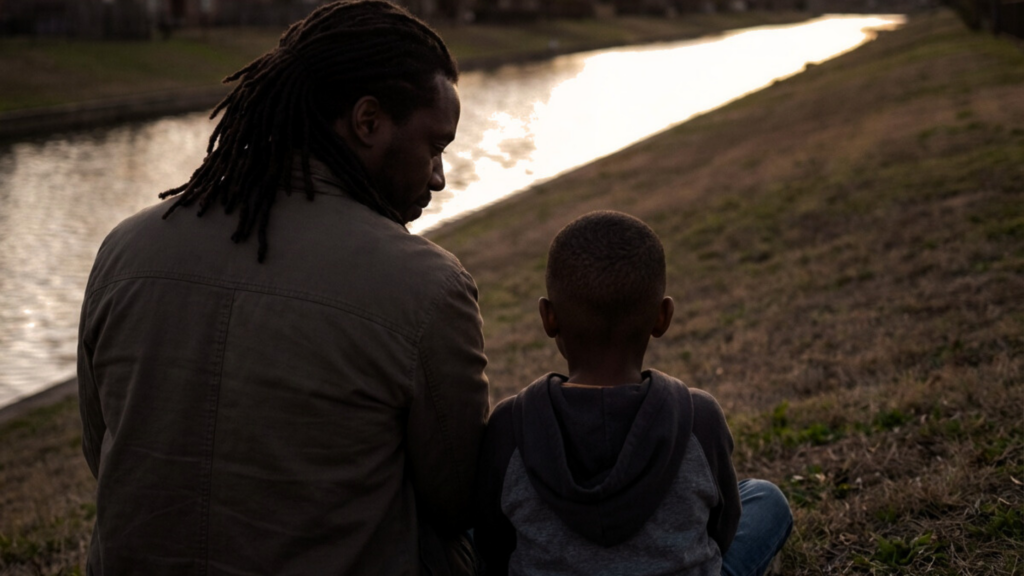
But I never gave that little boy inside me any closure.
And during this moment of calm and quiet, he chose then to speak.
Luckily, I was quiet enough to hear him.
So I did something I’d never done before.
I wrote him a letter.
Not to my father—to the 11-year-old boy standing outside Manning’s High School, waiting for a man who would never show.
My Adult Self Meets My Child Self
How we met:
The boy, sitting in the grass closer to the canal, at dusk.
The man I am now, gets up and walks over, sits beside the boy: small, observant, hopeful, hurting, waiting for a father who kept disappearing.
This was the conversation.
ADULT MARIO:
Hey… I’ve been looking for you.
I know you’ve been carrying something heavy for a long time, and you thought you had to hold it alone.
You don’t anymore.
BOY (Young Mario):
I didn’t want to bother anyone.
I didn’t know who would stay.
I didn’t know if it was me…
maybe if I was better, he wouldn’t leave again.
A:
Listen to me carefully —
you never did anything wrong.
You were a kid.
His choices were never your fault.
He was the storm…
you were just standing in the rain.
B:
But I kept hoping. Every time he came back, I thought maybe this time—
A:
I know.
And that hope kept you waiting in the doorway long after he walked away.
But you don’t have to wait anymore.
We’re done waiting for a man who couldn’t stay.
B:
So what happens to me?
Where do I put all this… all the times I felt like I wasn’t enough?
A:
You put it here —
with me.
I’m the man you became without him.
I’m the proof that you didn’t need him to become strong, disciplined, loyal, intuitive, wise, steady.
Look at me.
You made me.
B:
…You look strong.
Not angry.
Just… certain.
A:
Because we survived something that should have broken us. And now it’s time to retire the job you took on way too early—trying to earn love from someone who didn’t know how to give it.
You never had to earn love.
You were worthy the whole time.
B:
So you’ll stay?
You’re not going anywhere?
A:
I’m not going anywhere.
I don’t leave.
I don’t disappear.
I don’t break the promises he broke.
You’re safe with me now.
You don’t have to hold anything alone again.
B:
…Can I rest now?
A:
Yes.
Rest.
I’ve got it from here.
Something broke open after that.
Not the wound itself—but the seal I’d kept over it.
The boy didn’t disappear. He integrated. He merged with the man I’d become.
I wasn’t carrying him anymore. He was finally carrying himself—through me.
This is what healing a father wound looks like. Not forgetting. Not forgiving if forgiveness isn’t earned. But integrating. Two timelines—boy and man—finally converging into one person who understands both what was lost and what was built in its place.
My adult side had accepted the situation logically months ago. But the boy needed closure emotionally.
And that night, under the avocado tree by the canal, he finally got it.
The Foundation
Here’s what I’ve learned about building yourself as a man, as an entrepreneur, as someone trying to create something meaningful in this world:
A strong foundation is everything.
And the first foundation a man needs to fortify is himself.
Not his business. Not his reputation. Not his bank account.
Himself.
This father wound—this thing I carried for three decades—is part of that foundation. And you don’t heal it by ignoring it. You don’t overcome it by grinding harder or achieving more.
You fortify it by integrating it.
By sitting down with the version of you who got hurt and telling him: I’ve got it from here.
A Message for My Brothers
This part is for you.
For every man who grew up without a father—or with one who was present in body but absent in every way that mattered.
For every boy who became a man without instruction, without modeling, without the steady hand on your shoulder saying, This is how it’s done.
For every man carrying a wound he never named because naming it felt like weakness.
You have a choice.

You can recycle the pain. Let it harden you. Make you angry, distant, cold. Let it turn you into the hyper-masculine rage machine or the fragile shell pretending to be strong.
Or—
You can use it.
Shape it.
Forge it.
Turn it into the blueprint for the man you choose to become.
You are not defined by what you lacked.
You’re defined by what you build in its place.
We are the generation that breaks this cycle. We are the men who will become the fathers we needed. We are the ones who turn wounds into wisdom, absence into presence, survival into thriving.
Especially you—my Black brothers who learned survival long before you learned self. Who carried the weight of being “the man of the house” at ages when you should’ve still been boys. Who built armor so thick you forgot what it felt like to be soft.
You don’t have to carry it alone anymore.
You can sit down with the boy inside you—the one who waited, the one who hoped, the one who internalized blame that was never his—and tell him what I told mine:
You were worthy the whole time.
Both Keep Building
The boy who waited and the man who stopped waiting are finally the same person.
And together, we keep moving forward.
The foundation isn’t perfect. It’s scarred. There are cracks where the ore didn’t fully melt, places where the steel remembers being something softer, something breakable.
But it holds.
And that’s what matters.
You build on it. You fortify it. You integrate the wound into the structure instead of pretending it isn’t there.
Because here’s the truth they don’t tell you about father wounds:
They don’t heal by disappearing.
They heal by becoming part of the foundation you build everything else on.
The boy rests now.
And the man keeps learning and building.




[…] focus at this stage should be getting out of your own way and starting, along with matching your skills, experience, and passion to those that will be needed to bring […]