
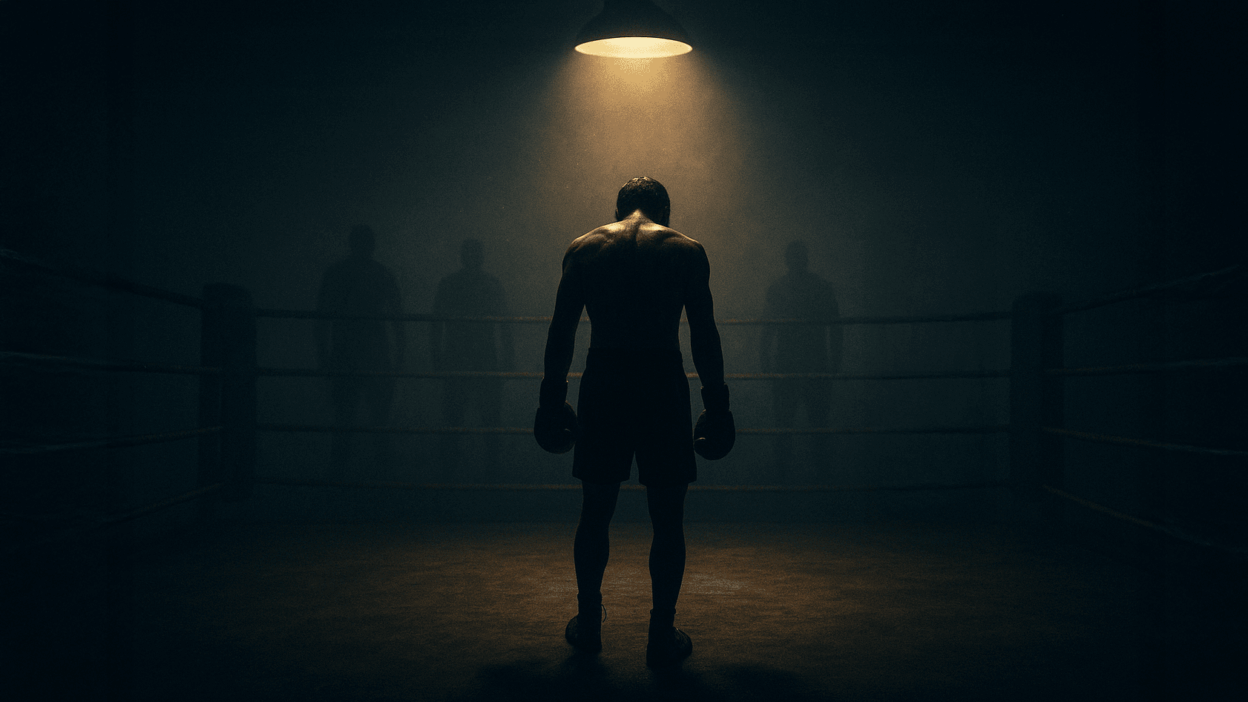
There’s a particular kind of terror that settles in when you’re driving to the gym at 5 a.m., squinting through one eye because the other one has decided it’s done working, and you realize you can’t see the lines on the road anymore.
I never saw this coming.
By the third time it happened, I literally couldn’t see much of anything.
Let me tell you about the enemy that kept attacking me when I was too busy fighting everything else. The one that forced me to learn what resilience really means—not refusing to fall, but refusing to stay down. Not avoiding the fight, but adapting to it even when you can barely see who you’re fighting.
This is the story of how I lost my vision three times and kept moving forward anyway.
Battle One: The Enemy Reveals Itself (2018)
The first time my vision started to fade, I was too busy surviving to notice the warning signs.
It was 2018. A year after ChairsAhoy—my furniture drop-shipping company—had imploded. I’d clawed into a hospital job—patient transporter, then Health Unit Coordinator—while driving Uber nights and freelance writing in between.
Sleep was an afterthought. Bank notifications: -$460. At least the car payment went through. But it was Monday, already $500 in the hole. I couldn’t afford to sleep.
So I didn’t.
Instead, I drank coffee. Four or more 16-ounce cups per shift—some with a shot of cafecito poured in, for all my Miami natives who know exactly what that means.
It was the perfect storm brewing, and I was standing right in the middle of it.
One night, poorly building an MVP for Foodiwant on WordPress—oh god, that thing was bad—I saw a dark dot in my right eye. Not a peripheral floater. Dead center. Staring me down.

Hm. That’s weird.
I figured I’d give it a couple of days. More coffee, please. Light on the sleep. Of course I can cover that shift.
By the end of the week, the dot had expanded into a small disk with a dark center and opaque edges. My vision in my right eye was noticeably poor—like looking through a thin screen with a growing shadow in the middle.
But by the end of the next week, I couldn’t ignore it anymore. I scraped together enough to cover my urgent bills and scheduled an appointment with an ophthalmologist.
Luckily, I had insurance and could have the copay deducted. It’s the small things. And now one of those small things—my vision—was going bad, and I needed to figure out why. A different kind of fear began to settle in: Would I lose the vision in my right eye completely?
I saw Dr. Jallow Sulayman, MD, out of Pembroke Pines. Cool doc, down to earth, incredible patient care. His office was packed, but once you were in, you felt heard.
He took a look at my eye and read it like a book.
Sleep was the first thing he pointed to—he could tell I wasn’t getting much. Then he smiled a bit and, in his island accent, asked me what I was stressing about. “You’re a young man,” he said, almost fatherly.
He explained that the pressure in my eye had gotten too high and vessels had burst, leaking fluid behind my retina. That’s what was affecting my vision. In healthy people, this is generally tied to high stress.
Then his tone shifted. Serious. Fatherly again, but firm.
“If this keeps happening, you can eventually lose your vision completely.”
The diagnosis had a name: Central Serous Chorioretinopathy (CSCR)—a condition where chronic stress causes fluid buildup behind the retina. Research backs this up: CSCR is strongly linked to elevated cortisol levels, sleep deprivation, and excessive caffeine consumption. All boxes I’d checked with enthusiasm.
Two sessions later, I went in for what I can only describe as a light show. Dr. Jallow used lasers to seal the leaks in my eye. He advised me to slow down on the coffee, get sleep, and find a way to manage my stress—or this surgery could reverse itself.
Over the next couple of months, my vision slowly cleared up as the fluid drained from my eye.
I was appropriately scared. At least mostly. I cut down on the coffee and started getting more sleep—not a healthy amount, but closer. Around 4-5 hours per night, with a Saturday recharge when I could.
Lesson One: The enemy has a name. Stress doesn’t just live in your head—it attacks through your body. And if you ignore the warnings long enough, it takes what you take for granted.
Battle Two: The Enemy Adapts (2022)
The second time it happened, I thought I was ready.
By 2022, I’d rebuilt my life. I was functioning at a stable level—maybe not where I was before ChairsAhoy collapsed, but making progress. My habits had improved. I was drinking little to no coffee. My stress was somewhat managed. My sleep was better—still averaging 4-5 hours most nights, but with periodic weekend recharges.
Then my vision started blurring again. Faster this time.
I wasn’t as thrown off guard. I wasn’t as terrified. But I was frustrated. I’d done everything right. Or so I thought.
Before seeing Dr. Jallow, I self-diagnosed. Coffee minimal, sleep better, gym consistent, diet controlled—no sodas, no fast food. Nothing jumped out.
Except peanut butter. I’d been consuming alarming amounts for bulking—sometimes four containers a week.
Along with the CSCR, I’d also started having gout-like symptoms in my toe—sharp, stabbing pain that interrupted my gym time. That was new. And annoying.
Research led me to high fructose corn syrup in my peanut butter—linked to gout and thinned blood vessels.
Ding. Ding. Ding.
My high levels of peanut butter—and its HFCS content—could be the enemy in disguise.
Time for a live controlled experiment. I stopped consuming peanut butter immediately.
Over the next week and a half, my toe pain lessened and then disappeared completely. My vision—or the blurring of it—also paused. It wasn’t immediately getting better, but it wasn’t getting worse either. That felt like a good sign.
It was. Over the next few weeks into a couple of months, my vision slowly returned.
I marked this as an incredible victory. Top-tier adjusting. But I didn’t learn the deeper lesson—I just thought I’d outsmarted the problem. All I took away was that everything bad I’d heard about high fructose corn syrup might actually be true.
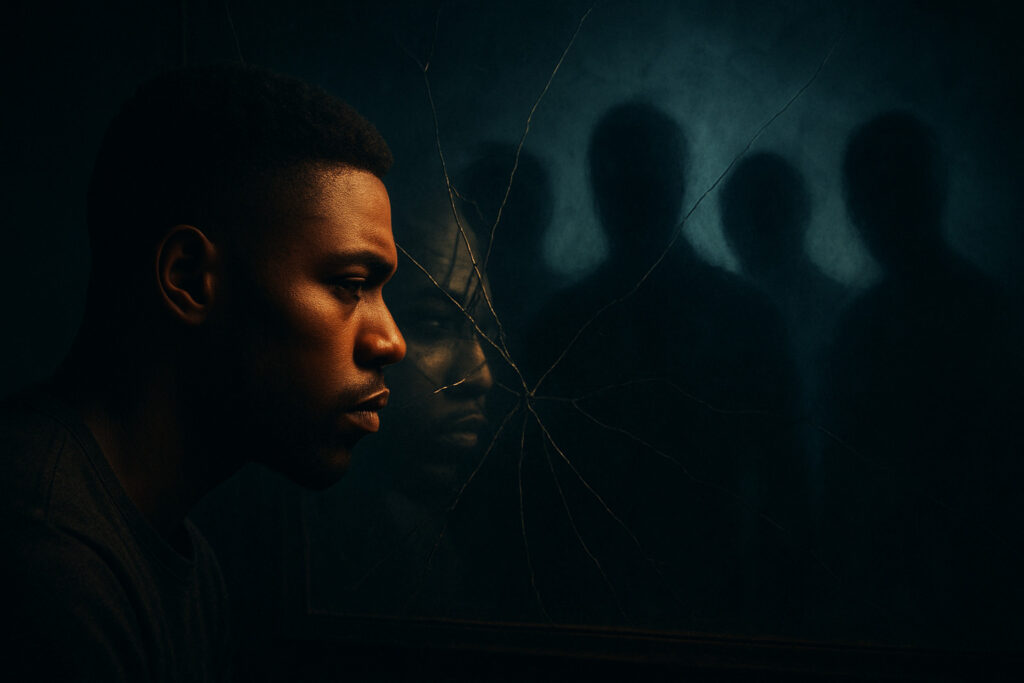
Lesson Two: Past battles teach you how to fight future ones. But the enemy evolves. And if you’re not paying attention, it finds new ways in.
I thought I’d learned my lesson. Two years later, I’d learn I’d only scratched the surface.
Battle Three: The Abyss (2024-2025)
The third time was different.
This time, I almost lost everything.
Fall 2024: promoted to head of my department. Should’ve felt like a win. Instead—twice the work, unclear directives, training new team members while the old guard exited. For months, I felt like a crash test dummy.
Away from work, Foodiwant crashed again. Another rocket exploded. All this time. All these failures. Maybe I should’ve just learned to code myself.
I was working 9-10+ hour days at my day job, clearing more work at night, squeezing in Foodiwant, then sleep. My 4-5 hours became 3-4. Then 3.
Caffeine snuck back in—this time through energy drinks before workouts.
Sister elements to a familiar time. Long, demanding days. Little to no sleep. Nature’s rocket fuel pumping through my veins.
It all sounded incendiary. Because it was.
The only difference this time was that I wasn’t breaking. I wasn’t falling apart. I barely even paused.
My vision started fading in November. By early December, it was almost completely gone. I was down to maybe 20% vision in my right eye—only my peripheral worked. My left eye was now in charge.
Dr. Jallow was fully booked until late December. Mom got me in with another ophthalmologist a week before Christmas. Mom for the win. Clutch.
Diagnosis confirmed: CSCR, with a vengeance.
The plan: wait a month to see if it self-resolves—happens in 80-90% of cases. If not, surgery. Not what I wanted to hear, but fair. I got a follow-up scheduled for two months out and grid paper to track my progress.
I started 2025 with 20% vision in my right eye.
And I kept going.
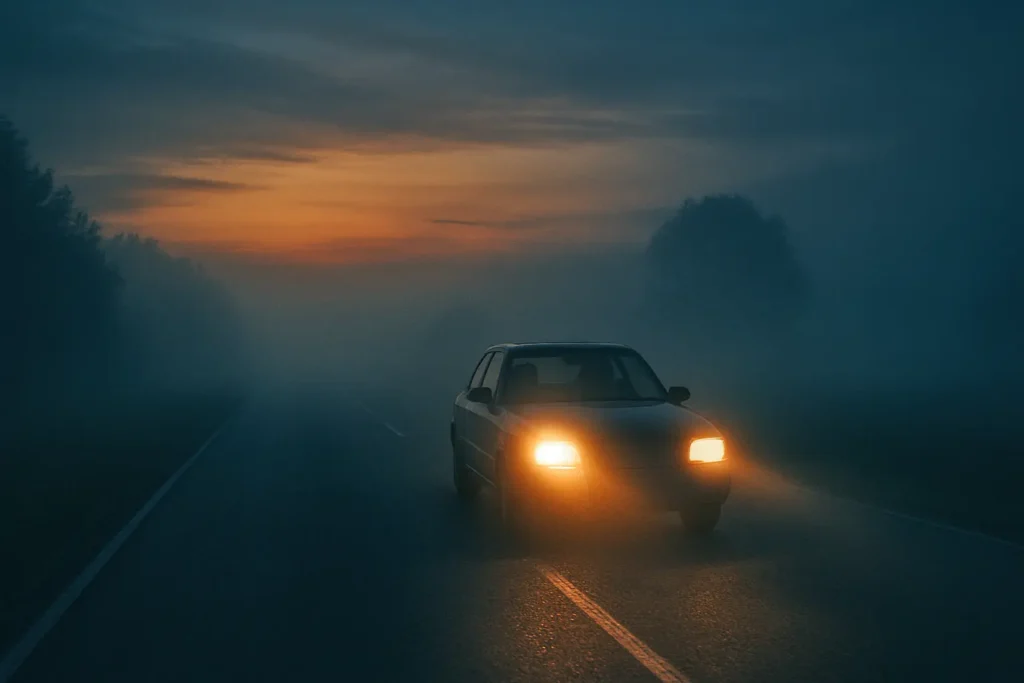
I continued driving to the gym at 5 a.m.—cutting my speed, closing one eye, struggling to see the lines on dimly lit streets or when floods of oncoming headlights blinded me. The road would disappear in patches, my good eye compensating while my right eye fed me shadows and blur. Looking back, it was reckless. In the moment? Necessary. This is what warriors do. You adapt. You continue.
One of the “gifts” CSCR brought this time was what I called fish bowl vision. If I closed my left eye and looked through my right, whoever I was looking at had a giant body and a tiny head. Hilarious, considering. The universe has a dark sense of humor: give a man a vision for his business, take away his actual vision.
The other gift? Frequent migraines. Light became my enemy. The small amount of parsed light getting into my right eye wreaked havoc on my senses, triggering repeated migraines that felt like someone was driving nails into my skull.
But here’s the thing: I didn’t curl up in a corner asking, Why me?
I made a decision. If I was going to go blind, I wasn’t going to sit and agonize about it. I wasn’t going to cry. I wasn’t going to let it sideline me.
If God saw fit to take away the vision I’d taken for granted, I would accept it. I would adjust. I would keep moving.
That acceptance—not surrender, but acceptance—was a light even as my vision got darker.
To the outside world, except for a couple trusted confidants, everything was right as rain. Even as my vision became gradually darker, I continued working out, working, and getting through my days the best I could.
Two months later, my vision started reversing. Fish bowl vision returned—distorted, but I could see faces again. By May, I was 50% recovered and trending toward full. By June, I hit 97% back. The slight warp remaining? Scarring. Battle scars.
My vision stuck around just long enough for me to enjoy my birthday on July 5th. Then it made a U-turn.
At my fourth follow-up, the doctor told me relapses like this are normal with CSCR. The recurrence rate is 30-50% for patients, especially those under chronic stress.
Ten months into 2025, it feels like a new normal. Even as my vision returns to baseline once again—currently around 80%—I’ve adjusted. With my new normal, I hardly noticed when the migraine episodes decreased or when I could see vibrant colors again.
Lesson Three: Resilience isn’t refusing to fall. It’s refusing to stay down. Acceptance isn’t surrender—it’s freedom. And gratitude for small blessings? That only comes when you realize how easily they can be taken.
The Arena Doesn’t Close
Three battles. Three lessons. An enemy that keeps evolving.
You can’t leave the arena. Life doesn’t care if you’re ready or already down. Entrepreneurship is a gladiatorial match with no tap-out. You only choose how you fight.
When the lights go out and you can’t see the enemy anymore, you keep swinging. You adjust. You adapt. You find dark humor in fish bowl vision and keep driving to the gym at 5 a.m. even when you can only see out of one eye.
The war tank keeps rolling, even with one headlight dimmed.
But here’s the part I wish I’d understood earlier: Your body will force you to stop if you don’t choose to slow down first.
I’m not saying quit or take it easy. I’m saying pay attention to warnings before they become crises.
Stress is physical. It can take your vision, health, ability to fight. Willpower can’t override biology forever.
If you’re reading this and you’re in the thick of it—working long hours, running on fumes, telling yourself you’ll rest when you’ve “made it”—I need you to hear this:
The fight is long. But you’re no good to anyone if you break yourself before the fight is over.
Learn from your past battles. Adjust when the enemy adapts. And for the love of God, be grateful for the small blessings—the vision you take for granted, the health you assume will always be there, the ability to see the road ahead.
Because one day, you might not.
And when that day comes, you’ll have a choice: sit down and cry, or put on your armor, pick up your sword, and keep fighting—even when you can barely see.
Even with one headlight dimmed, the war tank keeps rolling.
And so do I.