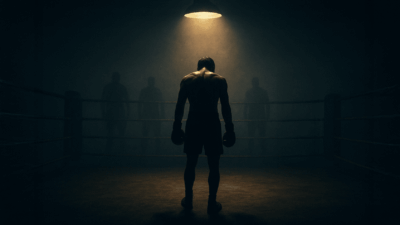


There’s a question that’s haunted me for years:
Will my failures be the bricks I build my future on—or am I stacking them into my own coffin, sealing myself off from oxygen and light?
Over and over again, I’ve failed. And yet, the strange part is that my confidence hasn’t died. It’s bent, sure—scarred and weighed down by doubt—but it’s still alive. Still burning. Sometimes I ask myself if that makes me determined or delusional. Maybe both.
Most nights, before sleep finally drags me under, I find myself asking: Am I insane? Foolish? Or just the world’s worst entrepreneur?
And then my alarm goes off. 3:30 a.m.
The world is still dark. The doubt is still there. But somehow, hope rises first. I pull myself out of bed, grab a glass of water, and start building again. Another step. Another attempt to figure out where the next brick in my bridge belongs—toward something greater, or maybe toward another fall. I never really know which.
That uncertainty used to terrify me. But lately, I’ve started to see it differently.
The Paradox of Fear and Faith
I’ve realized my fear isn’t rooted in failure itself—I’ve become almost fluent in that language by now. What gets me is perception.
The quiet, suffocating thought that I should have figured it out by now. That everyone else seems to be sprinting ahead while I’m still sketching blueprints in the dark. It’s that gnawing self-doubt that whispers, maybe you chose the wrong door. That maybe I should’ve picked the safer path—the one lined with signposts and proven frameworks instead of fog and guesswork.
But even in those moments when that thought sits heavy on my chest, there’s this voice deep inside that refuses to die. It doesn’t shout—it just speaks with a kind of calm defiance:
Keep going. I promise we’ll figure it out.
That voice—the one that somehow survives every disappointment—has become my compass. It reminds me that every failure is just another brick in the bridge, another lesson pressed into the foundation. Each experiment that doesn’t work still teaches me how to build something stronger the next time.
Maybe that’s what faith really looks like: walking forward in the dark with a kind of unreasonable belief that you’ll find the road under your feet.
When the Pivot Becomes the Precipice
Let me tell you about Q1 of 2025—the quarter that tested every ounce of that faith.
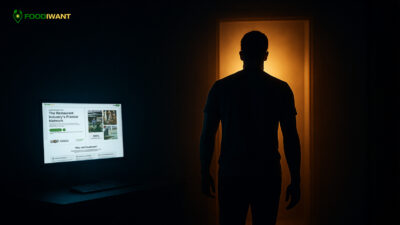
I’ve been building Foodiwant for longer than I care to mention. It started as a staffing marketplace for the restaurant industry, but recently we made a bold pivot: transforming it into a social network and marketplace where restaurant professionals and business owners could build careers, connect, and access resources they actually need.
The hypothesis was strong. The restaurant industry is still a chaotic giant with massive potential. This pivot, I believed, would be our breakthrough.
We funneled our bootstrapped funds—every dollar we had—into the necessary updates. A tech partner finally came aboard, someone who was supposed to take the lead on building the software while my remaining partner and I focused on sales and marketing. Everything felt aligned. Optimistic. The tides seemed to be pointing in the right direction.
Then came the familiar hiccup.
Software issue after software issue. The staffing functionality—the core feature driving our value proposition—was buggy and unusable. It had to be reworked. We spent two weeks and another $1,000 trying to patch it together.
And then, the self-proclaimed tech wiz went ghost.
Antennas should have gone up earlier. He’d claimed to be one of the builders of systems similar to the no-code platform we were using, but the moment he saw the backend, he looked stumped. Backtracking. I remained hopeful, but a voice in the back of my head told me this marriage would soon be getting annulled.
It did.
Now we were back to square one: limited funds, limited personnel, and a platform that didn’t work.
But the universe wasn’t done yet.
A few weeks later, I woke up and couldn’t see clearly out of my right eye. A trip to the doctor confirmed it: Central Serous Chorioretinopathy (CSCR)—a disease caused by fluid buildup behind the retina, often triggered by stress. I’d lost vision in my right eye.
Limited funds. Limited personnel. Limited vision.
The irony wasn’t lost on me.
Lessons from the Madman Inside
The mental and emotional frustrations mounted like a flood I couldn’t outrun. We were grossly behind on our timeline, and this most recent setback would push us back even further. My health, the depleting funds, the partner who vanished—it all felt like fuel poured onto an already burning house.
Some of the people close to me—people I’d confided in—responded with doubt. Could I really pull this off? The numerous setbacks had planted seeds of doubt in me, too.
But here’s the thing about 3:30 a.m.—it became my ritual of resurrection.
Every morning, my alarm would pull me from whatever restless sleep I’d managed to find. And despite everything—the failed pivot, the ghosted partner, the throbbing pressure behind my right eye—I’d wake up with a fresh batch of enthusiasm. Ready to attack the day.
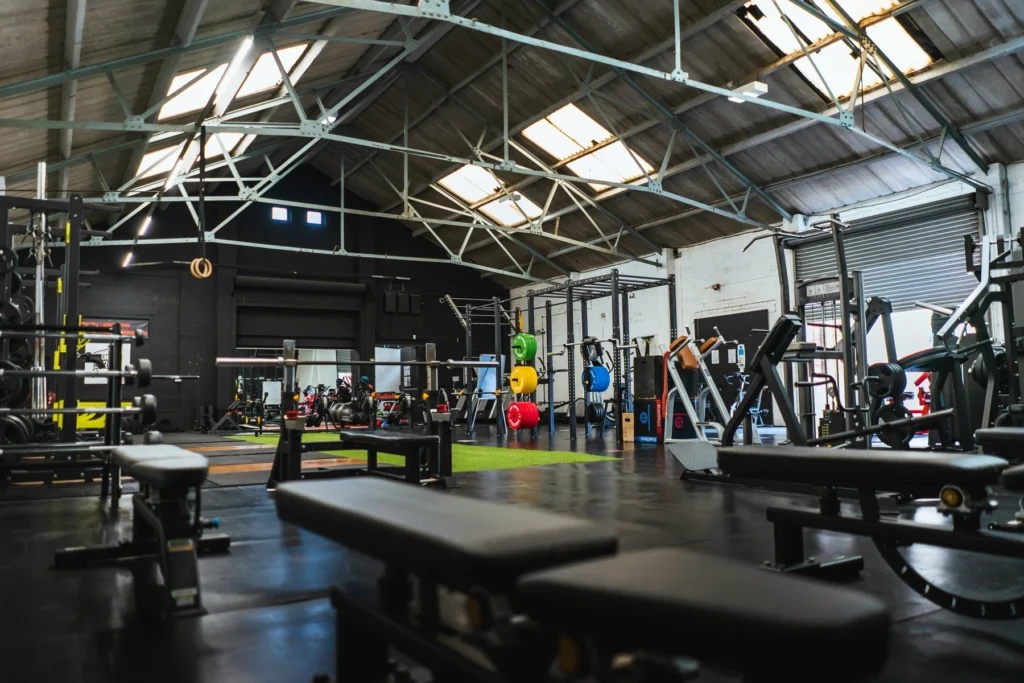
I’d do a little work first. Return emails. Check on my sites. Sometimes I’d meditate, letting the silence reset whatever anxiety had built up overnight. Then, at 5:00 a.m., I’d leave for the gym.
Those early hours became my proof of concept. Not for Foodiwant—for myself. They reminded me that no matter how heavy the previous day had been, I could still choose to show up. To move forward. To keep building.
The worst-case scenario still haunted me during the harder nights: What if I’m forced to kill the concept? What if this is where my pursuit ends?
But then morning would come. And with it, that voice again:
You will figure this out. You always do. This time will be no different. Just keep moving forward.
Sometimes I call that persistent voice my inner madman—the part of me that still wakes up optimistic after the 100th failed attempt. The part that chooses another long day of trying, testing, and tinkering over surrender.
He’s the one who reminds me that, yes, maybe I’ve made mistakes. Maybe I should’ve picked a path more frequently walked, one easier to navigate. But deep down, I know that would’ve been worse.
Because while my life might have looked more put together on the outside, something inside me would’ve been dying. The part that hungers to build something original—to become something original—would have suffocated.
So I keep going. One uncertain step at a time.
The Strategy Shift: Building with Better Bricks
After recognizing the failure, I knew a new software strategy was needed. The no-code platform we’d been developing on—despite its benefits—didn’t align with our needs. Instead of patching workarounds while burning through limited funds, we needed a new platform and software stack altogether.
But the software wasn’t the only thing that needed rebuilding. My framework for finding partners had to change, too.
The courting stage of any partnership—whether technical, operational, or financial—needs to go deeper. I learned the hard way that alignment isn’t just about skills or excitement; it’s about shared values, realistic timelines, and stress-tested commitment. Surface-level conversations aren’t enough. You need to dig into the hard questions early: What happens when things break? How do we handle conflict? What’s your real capacity?
The pivot we made was still a strong one. The restaurant industry is still ripe with potential. But I had to accept that progress would be slower than I wanted—and that’s okay.
The adjustment is still a work in progress. But I’m building with better bricks now.
Faith and the Long Road Forward
There are two things that keep me walking, even when the road feels endless.
First, history has proven that I eventually figure things out—usually later than I’d like, but always in time. Every fall has taught me something essential about the climb.
And second, there’s this invisible pull. I can’t explain it logically—it’s just a quiet knowing that I’m headed somewhere meaningful. That all these bricks, all these missteps, are leading toward a design I can’t see yet.
These failures leave me heavy with doubt. But more importantly, they force me to grow and expand. To learn more. To become more proficient. To lead better. To allocate resources smarter. To build systems and follow the right sequence, as Patrick Bet-David says in Your Next Five Moves.
My job is to be ready when I arrive—to recognize the moment when it comes and not let it pass me by.
So I walk. In faith, not certainty.

The Bricks You Can Lay Today
If you’re building something that keeps breaking—if you’re walking a bridge made of your own failures—here are three things that have kept me standing:
1. Lift the Weight Before the Day Lifts You
My morning workouts have been my saving grace. Even after losing half my vision, during those two therapeutic hours in the gym when I punish my body, everything feels right. I can lift everything heavy: the pain, the lonely journey, the failures, the doubt.
Every heavy weight I lift, through each set, is a challenge overcome. Social proof that anything else coming at me throughout the day is at my mercy.
Find your version of this—whether it’s running, journaling, meditating, or building. Create a space where you prove to yourself, daily, that you’re stronger than the obstacles ahead.
2. Build a Failure Database
Starting this week, I’m ending each week by writing down three lessons I’ve learned—from wins, failures, or continued challenges. This creates a “failure database” I can reference before making big decisions.
Failures aren’t random. Patterns emerge. By documenting them, you turn mistakes into strategic assets. Maybe I’ll share some of these lessons with you along the way.
3. Anchor Yourself to Quotes That Won't Let You Quit
Two quotes work in tandem in my head, pulling me forward when everything else says stop:
“If you can’t fly then run, if you can’t run then walk, if you can’t walk then crawl, but whatever you do, you have to keep moving forward.“
— Martin Luther King Jr.
“Nothing can withstand the power of the human will if it is willing to stake its very existence to the extent of its purpose.“
— Benjamin Disraeli
Find the words that won’t let you quit. Write them where you’ll see them at 3:30 a.m.
The Bridge Ahead
I don’t know how long this bridge will take to finish. I don’t know if the bricks I’m laying today will hold the weight of tomorrow. But I know this:
With every step—every lesson, every small victory, every failure I refuse to let define me—I keep building.
Someday, I believe I’ll have enough bricks to finish this bridge to the other side.
And if you’re building one too, I hope you keep stacking your bricks—even the broken ones—alongside me.